
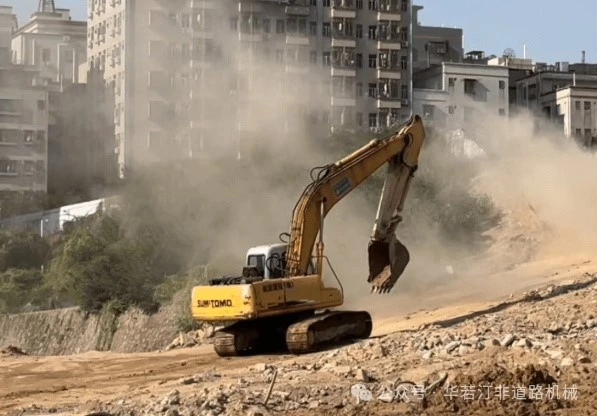
Currently, the construction machinery industry mainly relies on fuel as the power source. Common equipment such as loaders, excavators, and forklifts generally use diesel engines as their main power units. This high dependence on fuel has exposed numerous problems in practical applications, and environmental pressure is one of them.
In recent years, with the increasing global attention to environmental protection, the pollutants emitted by construction machinery have become a focal issue. These machines release large amounts of pollutants such as nitrogen oxides and particulate matter during operation, causing severe pollution to the air. For example, in urban construction projects, multiple construction machineries operate simultaneously, and the exhaust gas they emit deteriorates the air quality around the construction site. This not only affects the health of the construction workers but also has a negative impact on the living environment of the surrounding residents. The relevant environmental protection policies and regulations have become increasingly strict, and higher emission standards for construction machinery have been set. The upgrading from the third to the fourth emission standard has made outdated equipment that does not meet the standards face restrictions on operating areas or even be eliminated. This poses a challenge to the sustainable development of the construction machinery industry.
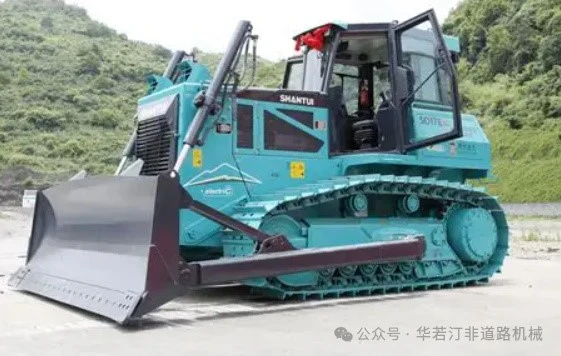
The issue of energy costs also poses a challenge to the development of the industry. The price of fuel is greatly influenced by fluctuations in the international crude oil market, and the instability of prices increases the operating costs for enterprises and construction units. In some large-scale engineering projects, the fuel consumption of construction machinery is a significant expense. Take a large construction site as an example, the daily fuel consumption costs for multiple excavators, loaders, and other equipment are high. If the price of fuel rises, the project cost will increase significantly. According to relevant data, in some long-term construction projects, the cost of fuel can account for 20% - 30% of the total cost, becoming a key factor limiting the economic benefits of the project. Moreover, traditional fuel is a non-renewable resource. As resources gradually decrease, the stability of its supply also faces challenges, which has prompted the construction machinery industry to seek new energy solutions.
The dawn of oil-to-electricity transformation is beginning to appear.
Policy support has provided impetus
In the context of the global efforts to actively address climate change and vigorously promote green development, governments of various countries have successively introduced policies to encourage the development of new energy. This has created an extremely favorable policy environment for the conversion of construction machinery from fuel to electricity. After China proposed the "dual carbon" goal, a series of policies supporting the development of the new energy industry were implemented in a concentrated manner. For instance, the government provided financial subsidies for the research and production of new energy construction machinery, and implemented tax incentives for enterprises purchasing new energy construction machinery. These measures effectively reduced the cost pressure of enterprises during the process of converting from fuel to electricity, stimulating their enthusiasm for participation. In some cities, to reduce air pollution at construction sites, the government gave priority to approving projects that use electric construction machinery for commencement. This directly promoted construction units to adopt construction machinery that has been converted from fuel to electricity. These policies also encouraged the construction of supporting facilities for new energy construction machinery, such as charging stations and battery swap stations, addressing the concerns of using electric construction machinery and further promoting the promotion of the conversion of construction machinery from fuel to electricity.
Technical breakthroughs empower
The rapid development of battery technology is the key support for the conversion of machinery from oil to electricity. In recent years, the energy density of lithium batteries has been continuously increasing, and the range of operation has been significantly improved. For example, lithium iron phosphate batteries have the characteristics of high energy density, long cycle life, and good safety performance, making them highly suitable for application in machinery. Taking an electric loader of a certain brand as an example, after being equipped with a new type of lithium iron phosphate battery, a single charge can meet the daily routine operation requirements, greatly improving the working efficiency of the equipment. At the same time, the cost of batteries has been continuously decreasing with technological progress and large-scale production, making the initial purchase cost of electric machinery increasingly close to or even lower than that of traditional fuel-powered machinery in some scenarios, which provides economic feasibility for the large-scale promotion of oil-to-electric conversion.
Significant breakthroughs have also been made in motor and electrical control technologies. Permanent magnet synchronous motors, due to their advantages such as high efficiency, energy conservation, and high power density, have become the preferred choice for construction machinery motors. They can precisely control the power output, meeting the operational requirements of construction machinery in different working conditions. For example, during the excavation operation of an excavator, the permanent magnet synchronous motor can adjust the output power in real time according to the excavation force, achieving efficient operation while reducing energy consumption. The advanced electrical control system is like the "brain" of the construction machinery, achieving precise control of the battery and motor, and improving the stability and reliability of the system. Through optimization algorithms, the electrical control system can realize energy recovery and reuse, converting mechanical energy into electrical energy and storing it back into the battery during the braking or deceleration of the equipment, further improving energy utilization efficiency.
The rough and bumpy path of transformation
Technical obstacles remain to be overcome
Although there have been advancements in battery, motor and electronic control technologies, the conversion of construction machinery from fuel to electricity still faces numerous technical challenges. The adaptation and integration of the power system is a major challenge. Reintegrating the original chassis, transmission and other systems that were designed for fuel engines with the electric drive system is not an easy task. Take excavators as an example, during the transformation process, precise consideration must be given to the layout and installation of the battery. It is necessary to ensure that the vehicle's center of gravity is reasonable, the space utilization is efficient, and the collaboration between the motor and the original transmission components is resolved to ensure smooth and stable power output. The structural differences between different brands and models of construction machinery chassis are significant, and targeted design is required. It cannot be generalized. If the battery layout is unreasonable, the vehicle's center of gravity is too high or shifted, it will directly affect the stability of equipment operation and safety.
Although battery technology has significantly improved, there is still a concern about battery endurance for equipment such as construction machinery, which has high energy consumption and requires long-term operation. Currently, even with advanced lithium battery technology, some large construction machinery, when operating at full capacity, cannot meet the demand for a full day of intense work with their battery range. Moreover, charging speed is also a bottleneck. Compared to refueling with fuel that can be completed in a few minutes, the charging time for electric construction machinery is much longer. Even with fast charging, it still takes several hours, which greatly affects the efficiency of the equipment and limits its application in scenarios where the continuity of operations is highly demanded.
The thermal management system is also one of the key technical difficulties in the conversion from fuel to electric power in construction machinery. During the operation of the motor and battery, a large amount of heat is generated, which requires efficient cooling measures. Unlike fuel-powered equipment, the thermal management of electric construction machinery is more complex. It needs to take into account the temperature control of both the battery and the motor simultaneously to ensure they operate within the optimal temperature range, extend their service life, and ensure stable performance. If the thermal management system is not designed properly, overheating of the battery may lead to capacity reduction, shortened lifespan, and even cause safety accidents; overheating of the motor will affect its output power and reliability.
The cost dilemma is difficult to solve
The conversion of construction machinery from oil to electricity involves high upfront costs. For existing equipment to undergo the oil-to-electric conversion, the power system, battery pack, and electronic control system, among other core components, need to be replaced. The procurement and installation costs of these components are very high. Taking a medium-sized excavator as an example, the conversion cost for its oil-to-electric conversion could be as high as several hundred thousand yuan. This is a considerable expense for many enterprises and construction units. Even new electric construction machinery, due to the high cost of key components such as batteries, its price is generally higher than that of the corresponding fuel-powered construction machinery. This means that customers need to bear greater financial pressure when purchasing.
During the usage process, the cost of battery replacement is also a long-term burden. Although battery technology is constantly advancing, the lifespan of current lithium batteries is still limited, typically ranging from a few years. When the battery capacity has declined to a certain extent, a new battery pack needs to be replaced, and the cost of replacing the battery is relatively high. For example, the cost of replacing the battery pack for a large-scale construction machinery may reach tens of thousands of yuan, which increases the long-term operating cost of the equipment.

The cost of constructing charging facilities is also a significant factor hindering the widespread adoption of electric-powered construction machinery. To achieve the widespread application of electric construction machinery, a complete charging infrastructure needs to be established. At some large construction sites, mines, and other operation sites, charging piles, battery swap stations, and other facilities need to be installed. The construction of these facilities requires a large investment in equipment procurement, site renovation, and power connection. It also needs to consider the subsequent operation and maintenance costs. Moreover, in some remote areas or regions with unstable power supply, the difficulty and cost of building charging facilities are higher, which to a certain extent limits the application scope of electric construction machinery.
Market Response: Acceptance or Observation
The market's attitude towards the conversion of construction machinery from fuel to electric power shows a diverse trend. Different application scenarios and user groups have different reactions. In some urban construction projects with extremely strict environmental requirements, electric construction machinery has received high acceptance. For example, in some metro construction projects in first-tier cities, the surrounding population is dense, and the control requirements for noise and emissions are extremely high. When traditional fuel-powered construction machinery operates, the noise and exhaust it generates will cause serious disturbances to the lives of nearby residents. However, the low noise and zero emission characteristics of electric construction machinery exactly meet this demand. A metro construction project manager said that after they adopted electric excavators and electric loaders, the complaints from nearby residents significantly decreased, and it also met the environmental protection requirements of the local government, making the construction process more smooth.
In indoor working scenarios, such as the construction and decoration of large shopping malls and warehouses, electric construction machinery is also highly favored. These places have relatively enclosed spaces and limited ventilation conditions. The exhaust gases emitted by fuel-powered equipment are difficult to be discharged, which seriously affects the indoor air quality and the health of construction workers. Electric forklifts are widely used in logistics warehouses. Their zero-emission and low-noise characteristics not only improve the working environment in the warehouse but also avoid potential safety hazards caused by fuel leakage and other issues.
From the perspective of market application cases, some enterprises have achieved successful experiences in converting construction machinery from fuel to electric power. Tai Shui Group transformed a TZ210 fuel hydraulic excavator into a 20-ton class towable electric excavator. The diesel engine was replaced with a three-phase asynchronous 110kW motor. The user stated that compared to fuel costs, the electric drive could save approximately 60% of the cost per day, and the cost could be recovered in less than a year. Moreover, the design of the towable type allows for direct connection to an external power source, eliminating the need for charging, enabling 24-hour uninterrupted operation, and significantly improving work efficiency.
A large construction company implemented the oil-to-electricity conversion project at its construction site. The company first evaluated the energy demand at the site and determined the specifications of the electric excavator. After market research, it selected well-known brand electric excavators and constructed a site charging station. For existing excavators, the oil-to-electricity technology solution was modified, replacing the internal combustion engine and fuel system with electric motors and battery packs, and providing professional training for the operators. After a one-month trial run, adjustments were made based on feedback. After the project was implemented, although the initial investment was high, in the long run, the operating costs of electric excavators were significantly lower than those of diesel engines, with lower electricity costs and less maintenance costs for the electric motors. At the same time, electric excavators emitted almost no emissions, reducing the carbon footprint at the construction site, reducing noise pollution, and improving the quality of life for workers and surrounding residents. The company also received positive social recognition for taking environmental protection measures, enhancing its corporate social responsibility image, and accumulating oil-to-electricity technology experience, which can be used as a reference for the same industry.
However, there is also a wait-and-see attitude in the market. Some construction units and enterprises still hold a cautious and wait-and-see attitude towards the conversion of construction machinery from fuel to electric power. The main reason is concerns about the reliability and stability of the new technology. Some enterprises are worried about whether electric construction machinery can operate stably in complex working conditions, such as in mines and in the wild, whether the performance of the battery and the reliability of the motor can meet the requirements of high-intensity operations in such environments. Some enterprises also consider the residual value of the existing fuel equipment and are reluctant to replace it with electric equipment too early, fearing high investment costs and an uncertain return period.
Opportunities and risks coexist
Looking ahead, the conversion of construction machinery from fuel to electricity holds tremendous development opportunities. From an environmental perspective, the widespread application of electric construction machinery will significantly reduce pollutant emissions, contributing to the achievement of global climate change mitigation goals. With technological advancements and cost reductions, electric construction machinery is expected to gain a larger market share, driving the entire industry towards a green and sustainable direction.
From an economic perspective, in the long term, electric construction machinery has significant advantages in terms of energy costs and maintenance costs. Although the initial investment is relatively high, as battery technology matures and economies of scale are realized, the purchase cost of the equipment is expected to further decrease. Moreover, the cost of electricity is relatively stable and is not affected by fluctuations in the international crude oil market, which will provide more predictable operating costs for enterprises and construction units, thereby enhancing economic benefits.
Technological innovation is also an important opportunity brought about by the conversion of construction machinery from diesel to electric power. The development in this field will drive continuous innovation in multiple domains such as battery technology, motor technology, electronic control technology, and charging facility technology, injecting new impetus into the development of related industries. For instance, the innovation in battery technology may lead to the emergence of batteries with higher energy density, greater safety, and lower costs, which will not only be applied in the construction machinery sector but also have a profound impact on the electric vehicle and energy storage industries.
However, the future development of converting construction machinery to electric power also faces some risks and challenges. In terms of technology, although certain progress has been made so far, there are still many key technical problems that need to be overcome, such as the improvement of battery energy density, the acceleration of charging speed, and the optimization of the thermal management system. If these technical issues are not effectively resolved, it will limit the further improvement of the performance of electric construction machinery and the expansion of its application scope.
Cost risks still exist. Even though the cost of batteries is constantly decreasing, in the coming period, the initial purchase cost of electric construction machinery may still be relatively high, which may affect the purchasing willingness of some customers. Moreover, the construction cost of charging facilities is high. If it cannot form a scale effect, it will increase the usage cost of electric construction machinery and hinder its popularization.
Market acceptance is also an uncertain factor. Although electric construction machinery is popular in some specific scenarios, to achieve a complete replacement of traditional fuel-powered construction machinery, it is necessary to change market concepts and user habits. Some users' distrust of new technologies, concerns about equipment performance and reliability, as well as issues related to the disposal of existing fuel equipment assets, etc., may all affect the speed at which the market accepts electric construction machinery.
Conclusion
Although the journey of converting construction machinery to electric power is fraught with difficulties, the prospects are undoubtedly bright. It is an inevitable choice for the industry to cope with environmental pressure and energy challenges, and it is also a key path for achieving sustainable development. Despite facing numerous challenges such as technical bottlenecks, cost dilemmas, and market acceptance issues at present, with the continuous support of policies, continuous technological innovation, and the gradual maturation of the market, these problems will eventually be resolved. In the future, we expect to see more construction machinery achieve the transformation from oil to electricity, adding a touch of green to our planet and opening up broader space for industry development.