
Engine connecting rod
The connecting rod transmits the force generated in the cylinder and acting on the piston to the crankshaft through the rod journal (Figure 7-18). The end of the connecting rod that is connected to the piston pin is called the small end, while the end that is connected to the crankshaft journal is called the large end. Both the small end and the large end have bearing surfaces. In this way, the linear force acting on the piston and driving it to complete the stroke can be converted from the rotating crankshaft journal to rotational force or torque. The connecting rod without a small end bearing used in conjunction with the crosshead piston does not have a saddle seat but instead has a saddle seat directly attached to the piston pin; therefore, the upper bearing is provided by the piston pin seat bearing. Most commercial diesel engines use two-piece connecting rods. The connecting rod is usually forged as a whole, and then the large end cap is separated, the mating surface is machined and fastened (bolted) for machining.
Split connecting rod
For years, split connecting rod technology has been used in racing applications, but now it has become common in diesel engines. Some diesel engine manufacturers call it fracture connecting rod technology. The large end of the split connecting rod is machined as a whole. After machining, the large end of the connecting rod is split. Depending on the material used, the fracture process may be carried out at room temperature, or the connecting rod may be frozen to a sub-zero temperature. Fracture requires radial separation through the large end of the connecting rod. This produces a rough-looking but capable of forming a perfect final mating face between the connecting rod and the connecting rod cover. As long as it is correctly assembled, the split connecting rod makes it unnecessary to perform the procedure of checking the side clearance of the connecting rod after assembly. Most diesel engine manufacturers use split connecting rods in at least some of their engines (Figure 7-19).

Figure 7-19 The mating surface of the cracked connecting rod: A. Decomposed state; B. Assembled state.
Connecting rod structure
Most connecting rods adopt a I-shaped cross-section design, but circular cross-sections have also been used. Most connecting rods have oil channels drilled from the large end to the small end to transfer lubricating oil from the crankshaft connecting rod journal to the piston pin for lubrication and cooling purposes. Trapezoidal connecting rods or wedge-shaped connecting rods have become common because they reduce the bending stress on the piston pin by increasing the loading cross-sectional area, which is ideal for diesel engines with high cylinder pressure. Wedge-shaped connecting rods have a wedge-shaped small end. Connecting rods bear two types of loads: compressive load and tensile load. The connecting rods shown in Figures 7-20, 7-21, and 7-22 all have wedge-shaped small ends. Due to the harsh operating conditions that connecting rods endure, they have complex metal properties. They need to have certain elasticity, be lightweight, and be able to absorb the compressive and tensile loads of the piston.
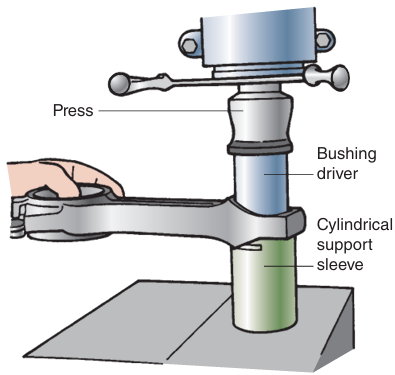
Figure 7-20 Disassembly of the piston pin bushing.
Compression load
During the compression stroke and power stroke of the cycle, the connecting rod is subjected to compression load. Another way to say it is "squeezing". Knowing the cylinder pressure and the piston cross-sectional area values, the degree of compression load on the connecting rod can be calculated. Commercial diesel engine connecting rods rarely fail due to compression overload. When this occurs, it usually occurs simultaneously with other faults (such as hydraulic lock). The hydraulic lock is usually the result of the failure of the cylinder head gasket, causing coolant to leak into the cylinder.
Tensile load
Tensile load is tensile force. At the end of each stroke, the piston actually stops in the top dead center (TDC) or bottom dead center (BDC) of the cylinder. When the engine runs at 2000 rpm, this motion reversal occurs nearly 70 times per second in each connecting rod. The greater the mass of the piston assembly, the greater the inertial force, and therefore the tensile stress on the connecting rod and crank connecting rod journal also increases. In engines using heavy articulated piston assemblies, this stress can be extremely extreme. The tensile load on the connecting rod increases with engine speed and the resulting piston speed. When the engine runs at excessive speed, the increased tensile load on the connecting rod can lead to tensile failure.
Offset head cap
Many manufacturers offset the mating surfaces of the two halves of the large head (from the horizontal direction). This ensures that the connecting rod bolts do not have to bear the entire tensile load of the connecting rod. The connecting rod shown in the connecting rod fixture in Figure 7-20 adopts an offset head.
Technical tip
One method to check if the connecting rod is slightly bent is to remove the cylinder head and check the height of each piston in the cylinder at the top dead center position. If the connecting rod is severely bent, the engine will not be able to rotate.
Connecting rod inspection
1. As shown in Figure 7-20, use a press to remove the bearing bushing, then install the head cap and tighten it according to the specifications.
2. Use an internal caliper or extension gauge that matches the outer diameter micrometer to measure the large head hole and the small head hole. The concentricity of the large head is crucial, and tensile force is the result of the connecting rod bearing load.
3. The straightness and twist of the connecting rod should be checked on a mechanical connecting rod inspection instrument (Figure 7-21) or an electronic connecting rod measuring instrument.

Figure 7-21 Connecting Rod Inspection Instrument / Connecting Rod Fixture.
4. Use compressed workshop air to blow out the oil channels in the connecting rod holes. If necessary, use nylon-bristled fishing line brushes for cleaning.
5. Finally, conduct an electromagnetic magnetic particle flaw detection on the connecting rod to check for cracks. This process involves using an electromagnetic iron to magnetize the connecting rod, and then applying fine magnetic powder (either dry method or solution suspension method). Cracks will interrupt the magnetic field, and the magnetic powder will concentrate at the defect. When the magnetic powder is suspended in the solution, it is coated with a white pigment so that small cracks can be observed using black light (ultraviolet light). Any component that has undergone magnetic particle flaw detection should be demagnetized before being reused.
6. When replacing the small end bushing of the connecting rod, the newly installed bushing should be sized and shaped using an extrusion-type reamer, as shown in Figure 7-22.

Figure 7-22 Compression-type forming piston pin bushing.
When handling connecting rods, extreme care must be taken. When assembling the connecting rod onto the piston, use a bench vise with copper jaws and apply light clamping pressure. Minor dents and scratches on the connecting rod can create stress concentration points, potentially leading to fracture failure. Most diesel engine manufacturers recommend conducting electromagnetic magnetic powder inspection every time the connecting rod is removed from the engine. Compared to the potential damage caused by the failure of the connecting rod, the cost of magnetic powder inspection is negligible. When the connecting rod fails in a running engine, the result is usually that the connecting rod is scattered and punctures the cylinder block casting. Manufacturers recommend replacing connecting rods that fail the inspection. When repairing the engine, remember that removing material from the connecting rod will change its weight, thereby altering the dynamic balance of the engine. Figure 7-23 shows the procedure for measuring the large head hole of the connecting rod using a micrometer.

Figure 7-23 Measuring the large hole of the connecting rod head using a micrometer.
Replace the connecting rod
Due to the fact that the repair of connecting rods is not common in today's diesel engine overhauls, connecting rods should be inspected according to the procedures outlined by the manufacturer. If they are found to be unqualified, they should be replaced. When replacing the connecting rod, weight matching should be carried out according to the manufacturer's technical service instructions. Since most trucks and buses with diesel engines have relatively lower speeds compared to gasoline engines, some manufacturers allow for some flexibility in this regard. However, replacing the connecting rod with different-weight (larger or smaller) connecting rods can result in engine imbalance. Manufacturers usually code the connecting rods by weight; typically,there is a window of about 1.4 ounces (40 grams) per weight class. When replacing defective connecting rods, be sure to match the weight code.
Most manufacturers require the replacement of connecting rod cap fasteners each time the engine is reassembled. Additionally, the replacement should be done using the correct manufacturer's fasteners instead of cross-matching SAE grade bolts. Considering the consequences of fastener failure at the connecting rod cap, the deformation and stretching of the threads make the risk of reusing these bolts very high. The actual failure rate is very low, but please remember that the consequences of connecting rod failure are serious. If you are performing this work for a client, it is recommended to replace the fasteners and leave the decision to reuse the fasteners to the client. If you are someone who likes to take a chance, for the case of offset mating of the large head, reusing the fasteners is more advantageous.
Connecting rod bearings
Most engine manufacturers use single-piece bushings pressed into the small end of the connecting rod for the small end of the connecting rod and two-piece friction bearing wafers for the large end of the connecting rod. The small end connecting rod bearings should be removed using a suitable mandrel or punch (see Figure 7-20) and a press or hydraulic press. It is not recommended to use a hammer and any punch that is not sized to the dimensions of the connecting rod small end hole,as the possibility of damage is very high. New single-piece bushings should be installed using a press and mandrel to ensure the oil holes are correctly aligned, and then sized using a reamer or honing tool, as shown in Figure 7-22. When installing the separate large-end bearings, attention should also be paid to the position of the oil holes and the measurement of the gap between the connecting rod journal and the bearing. Both the bearing wafers and the connecting rod small end bushings should be installed into clean and dry holes: by cleaning the bearings with a solvent, removing any packaging protective coating, and then drying with compressed air.
Technical Tip
After the connecting rod cap is tightened to the connecting rod according to the specified torque, the side clearance of the connecting rod should be checked. The jamming of the connecting rod cap and the connecting rod's mating can cause the engine to get stuck and damage the crankshaft by scraping the crank arm. In applications where the connecting rod is being cracked, this check is unnecessary as it can be assumed that the connecting rod cap and the connecting rod are perfectly mating. Moving the connecting rod assembly back and forth on the journal should produce a click sound, indicating side clearance.
Disassemble and install the piston
The piston assembly typically refers to the assembled piston, piston rings, and connecting rod. This is sometimes called the piston package. some manufacturers include the cylinder liner in their definition of the piston package. Most commercial diesel engines for road use are designed to allow for overhauls in the cab position when necessary: this means that the piston assembly can be removed from the engine without removing the crankshaft. In some engines, the size of the connecting rod head prevents it from being removed from the cylinder liner; in this case, the piston package and the cylinder liner must be removed as a unit. Before removing the piston, be sure to consult the manufacturer's service literature. Please note that in some non-road diesel engines, the piston assembly cannot be removed from the top, meaning that overhauls in the cab position are not possible. When installing the piston package into the engine cylinder bore, use the appropriate piston ring compressor.