
I. Basic Definitions and Installation Locations
Intake Throttle Valve (ITV)

- Position: Front end of the intake manifold, intake side of the turbocharger
- Drive: Electric butterfly valve
- Medium: Fresh air
2. National VI exhaust throttling valve (ETV, post-treatment throttling valve)
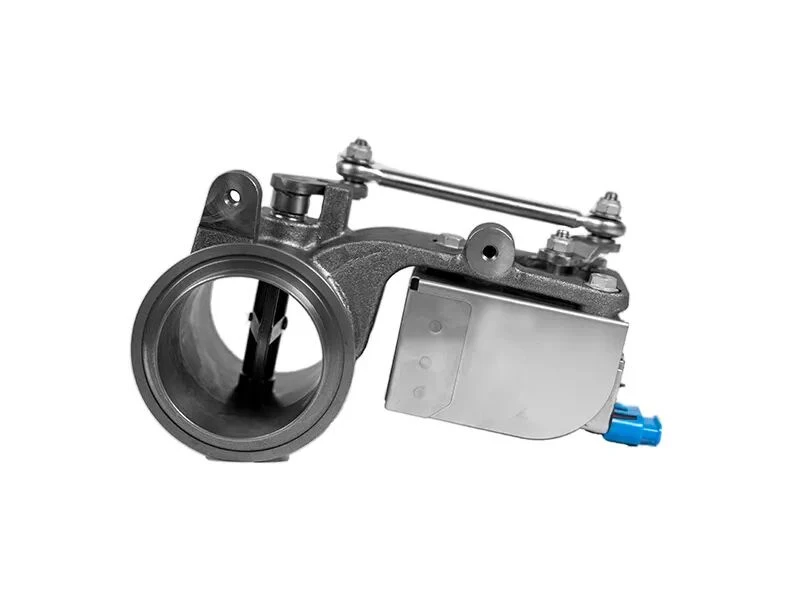
- Position: Outlet of the turbocharger, front end of the DOC (pre-processing section)
- Drive: Servo motor with position feedback
- Medium: High-temperature exhaust gas, core component of the thermal management system for the post-treatment system of the sixth emission standard
3. Traditional exhaust brake valve (mechanical exhaust brake)
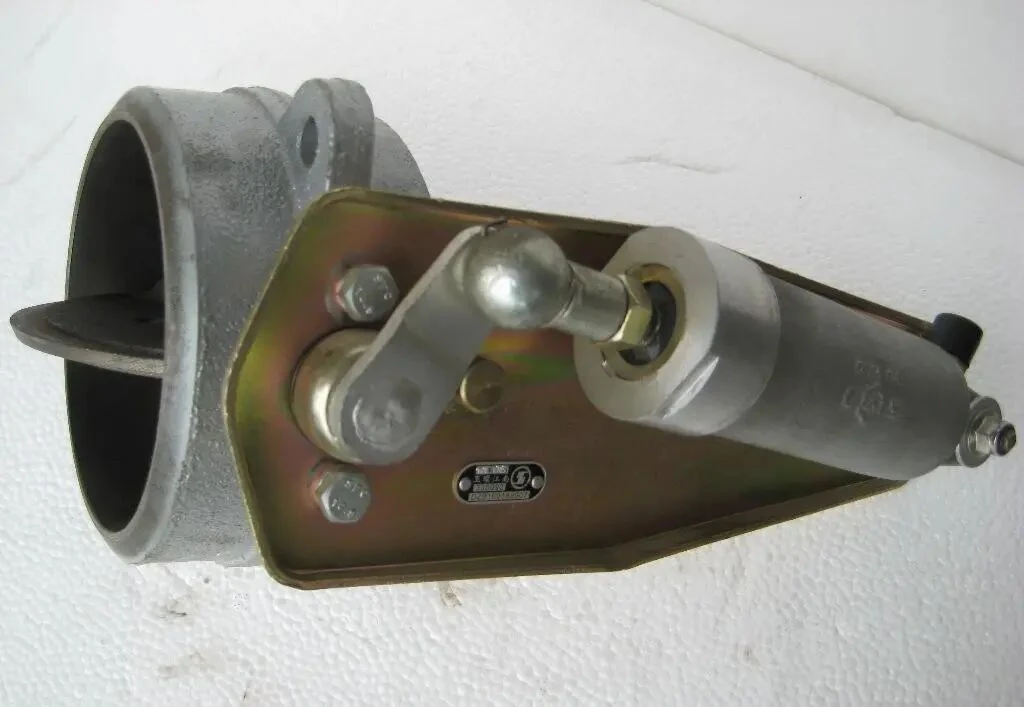
- Position: Turbine outlet, front section of muffler, after DOC / older vehicles without after-treatment
- Drive: Cylinder pneumatic (air pushing butterfly valve), without precise position feedback
- Medium: Exhaust gas, only for downhill slow-speed braking
II. Differences in Core Working Principles
Intake throttle valve (ITV)
Reduce the intake passage, and the intake volume of the cylinder will decrease:
1. The intake vacuum increases, the piston's intake resistance rises, thereby increasing the engine load and raising the cylinder temperature.
2. The oxygen content in the cylinder decreases, assisting in raising the exhaust temperature.
3. It is mainly used for cold start and regeneration heating of light-duty Euro VI diesel/gasoline vehicles.
Exhaust Throttle Valve (ETV) (Mainstream for National VI standard)
Reduce the exhaust channel size to create exhaust back pressure:
1. The exhaust resistance increases, the pumping loss of the engine rises, and more heat is generated;
2. The pressure difference boosts the EGR flow rate, optimizing NOx;
3. Precise and continuous adjustment of the opening degree, taking into account heating, regeneration, and mild braking.
Old-fashioned pneumatic exhaust brake valve
There are only two settings: fully on or fully off, with no intermediate adjustment.
1. Completely close the exhaust pipe, resulting in a huge back pressure that causes engine resistance;
2. Only used for deceleration on long downhill sections, without functions for temperature rise or EGR regulation.
III. Function Comparison Table
Intake Throttle Valve (ITV)
1. The compressor rapidly raises the temperatures inside the cylinder and in the exhaust.
2. DPF regeneration assists in temperature increase.
3. Idle speed stability control.
4. Slightly reduces the oxygen concentration in the intake air, assisting in reducing NOx.
5. Has no exhaust braking capability.
National VI exhaust throttle valve ETV (multifunctional)
1. Cool the engine and warm it up to quickly bring the DOC/SCR to the ignition temperature;
2. Active regeneration of DPF for stable temperature control (core function);
3. Increase exhaust back pressure, increase EGR flow rate, and reduce NOx emissions;
4. Improve turbine response at low speeds and reduce lag;
5. For medium and light vehicles without independent exhaust brakes, it can be used to replace and achieve slow braking;
6. Continuous and precise closed-loop control.
Traditional pneumatic exhaust brake valve (single function)
1. The engine operates at a reduced speed only on long downhill sections to minimize the wear on the brake pads.
2. It has no heat management system, no DPF regeneration assistance, and cannot adjust the EGR.
3. There are only two gears, and the temperature control cannot be partially activated.
IV. Differences in Operating Conditions Logic
1. Cold start
ITV and ETV slightly reduce the engine output to warm up; the old-fashioned exhaust brake valve remains fully open and does not participate.
2. Active regeneration of DPF
ETV moderately throttles to be the main force, with ITV providing auxiliary support; the old-fashioned exhaust brake valve does not intervene.
3. Normal heavy-load climbing
All three are fully open to avoid power loss and increased fuel consumption caused by throttling.
4. Deceleration on long downhill slopes
- With the old-fashioned exhaust brake type: The pneumatic valve directly closes the brakes completely;
- The lightweight Euro VI model without independent exhaust brake: ETV significantly reduces the opening to achieve a slow speed;
- ITV remains fully open throughout and does not participate in braking.
5. High-load EGR condition
Closing the ETV reduces the back pressure and increases the EGR flow rate; the ITV and the old exhaust braking system do not have this effect.
V. Differences in Structure and Control
1. Intake Throttle Valve (ITV)
Electric motor drive, position feedback, stepless adjustment; low working temperature, less prone to carbon deposition and jamming.
2. Exhaust Throttle Valve (ETV)
Operated in high-temperature exhaust environment, electric motor with high temperature resistance, high-precision position sensor, ECU closed-loop calibration; prone to carbon deposition, coking and jamming, high-frequency fault parts for the sixth emission standard.
3. Old-fashioned Exhaust Brake Valve
Pneumatic cylinder drive, no position feedback, only two positions of on and off; simple structure, durable, with single function.
VI. Classification of Fault Consequences
1. The intake throttle valve is stuck in the open position.
The vehicle takes a long time to warm up, the regeneration exhaust temperature is insufficient, occasional DPF regeneration failure occurs, and the torque limit probability is low.
2. The exhaust throttle valve ETV is stuck in the open position.
Post-treatment heating is difficult, DPF frequently fails to regenerate, reports low DPF efficiency, and long-term torque limit; EGR flow is insufficient, and NOx exceeds the standard.
ETV stuck in the closed position
Back pressure is too high, power is weak, fuel consumption increases sharply, and the exhaust temperature is too high and damages the DOC/DPF carrier.
3. The old exhaust brake valve is stuck in the closed position.
The braking resistance persists during downhill driving, normal driving power is poor, and the temperature is high; there are no emission-related fault codes.
VII. The simplest way to distinguish
1. Intake throttle valve: Controls intake air flow, only used for heating and not for braking;
2. Euro VI exhaust throttle valve (ETV): A multi-functional valve, used for heating, regeneration, adjusting EGR, and also for mild braking;
3. Old-fashioned exhaust brake valve: Specifically, for downhill braking, unable to control temperature or adjust emissions.