
1. What is a sensor
A sensor is a device that can sense a specified physical or chemical quantity and convert it into a usable signal. In many fields, sensors play a crucial role, whether in industrial production, medical health, or environmental protection, sensors play an indispensable role.
Meanwhile, sensors are an indispensable component in industrial automation equipment, serving as the link between the mechanical and control systems of the equipment. The mechanical system feeds back motion parameters and operating status to the control system through sensors, and the control system sends commands to drive the mechanical system through the signals and data feedback from the sensors. Its importance is self-evident.
Sensors are equivalent to various sensory organs of the human body, and the device control system needs to determine important parameters such as the position of the mechanism, the presence or absence of the product, and the accuracy of the product through them to monitor and control the usage status of the device and the production process of the product.
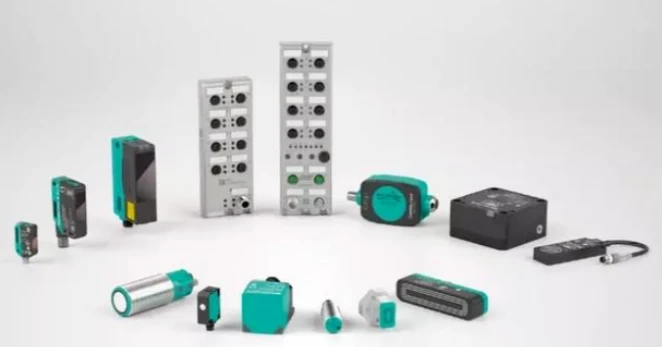
2.Classification of sensors
Sensors can be classified according to their usage, detection methods, and output model types.
(1) According to their usage, sensors are most commonly used in industrial automation equipment for various physical quantities such as detecting presence, position, shape, speed, and temperature.
(2) According to their detection methods, commonly used sensors in industrial automation equipment include magnetic switches, proximity switches, photoelectric switches, fiber optic sensors, gratings, displacement sensors, pressure sensors, thermocouples, laser sensors, encoders, etc.
(3) According to the different types of output models, sensors can be roughly divided into three types: switching output type, analog output type and digital output type. There are two types of sensors for switch output: one is normally open (NO) and the other is normally closed (NC). Three wire sensors with switch output usually have two output modes: NPN and PNP, which are low-level output and high-level output. Usually, the input/output interfaces of the controllers we use - PLC interfaces or input/output card interfaces of industrial control computers - accept NPN type output signals. However, NPN and PNP outputs can also be converted to each other through relays.
3.Selection of sensors
For the selection of sensors, we only need to understand their purpose and do not need to delve into the principles of sensors. Generally, we need to consider the following three issues:
(1) Testing requirements and conditions, measuring the characteristics of the target object, measuring purpose, measuring target value range, measuring frequency, etc;
(2) Sensor performance, detection accuracy, response speed, output signal type, etc. of the sensor;
(3) The working conditions mainly refer to the usage environment of the sensor and the connection environment with other devices.
In addition to considering the above three main issues, it is also necessary to consider the reliability and lifespan of the sensor. The reliability of sensors determines their stability and accuracy during long-term operation, while their lifespan directly affects the maintenance cycle and overall cost of the equipment. In addition, the maintainability and fault diagnosis capability of sensors are also important considerations when choosing, as these characteristics can significantly affect the operational efficiency and maintenance costs of the equipment. Therefore, in the process of selecting sensors, it is not only necessary to meet the current application requirements, but also to consider their performance throughout the entire device lifecycle.