
Although the irregular movement of the indicator ball on the main engine cylinder oil injector is not a problem that can cause the main engine to pull due to cylinder oil interruption, leading to major faults in the diesel engine, it cannot be ignored, and this problem is closely related to the management of cylinder oil.
The following is an analysis of the irregular movement of the cylinder oil injector indicator ball for the MAN6S26MC engine

Problem Overview
A certain ship is a liquefied gas carrier manufactured in Japan in 1995, with the main engine being MAN6S26MC and equipped with a mechanical oil injector (75lubricatorsHJdrwg).
In the winter of 2013 and 2014, there were irregular movements of the oil injector indicator ball, as follows:
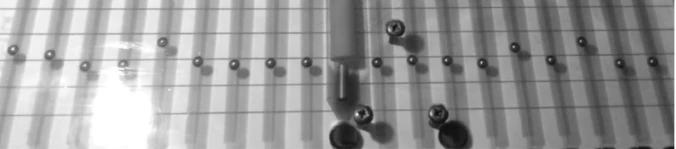
On a certain voyage from Nanjing to Wuhan in December 2013, when the main engine was running at high speed, the cylinder oil injector repeatedly exhibited irregular movements with varying heights of indicated marbles for each cylinder and oil filling unit (as shown in Figure 1).
At that time, the ship's engine personnel dismantled and inspected the heater of the oil injector. Except for severe scaling on the copper surface of the heating core of the oil injector, no other abnormal conditions were found. The electric heating tube was cleaned and reinstalled.
After sailing in Wuhan, the oil level indicator of the injector returned to normal and has been showing normal since then.
It is believed that this fault is caused by a heater malfunction.
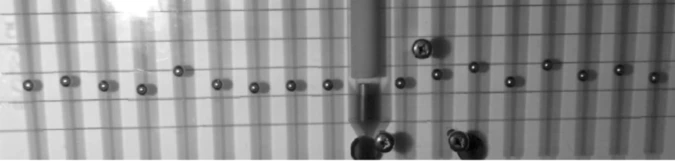
In the winter of 2014, on a certain voyage, Nanjing departed with full load for Wuhan. About two to three hours later, the main engine oil injector exhibited irregular movements again (as shown in Figure 2), similar to the situation in 2013.
Taking advantage of the anchor situation at Wuhan Port, dismantle the electric heater and replace it with a new one (both the replaced and the new ones are not original products);
At the same time, all pipelines (one section with a diameter of 30 and one section with a diameter of 20), valves, and hollow joints between the cylinder oil daily tank and the oil injector were dismantled, inspected, and cleared, and no abnormalities were found;
Finally, it was found that the square joint aperture of the oil injector was only about 8. Considering that such a small aperture may have a throttling effect on the cylinder oil entering the injector, the cylinder oil storage tank (whose highest liquid level is about 1 meter higher than the daily tank) was activated to supply the cylinder oil injector.
The next day, Wuhan anchored and docked (sailing for nearly 3 hours), and the fuel injection volume indicator of the injector occasionally showed abnormal phenomena of fluctuating high and low, but the frequency significantly decreased.
In the following voyages, while the main engine was running at high speed, it was found that the NO.1/2/3 cylinder oil injection unit rarely exhibited irregular phenomena. Occasionally, one or two units appeared briefly (about a few seconds). Compared to the obvious small amplitude of irregular ball indication action, the NO.4/5/6 cylinder still exhibited irregular action, but the frequency significantly decreased. The main engine continued to do so after moderate load reduction operation.
At this point, it is gradually recognized that this phenomenon is not caused by a heater malfunction.
Considering the impact of oil temperature, a thermometer was first installed (pasted) on the surface of the oil injector, and it was observed that the thermometer displayed up to 48 ℃.
Consciously reducing the control temperature of the cylinder oil heater, when the thermometer on the body surface of the injector shows about 38 ℃, the frequency of irregular movement of the marbles decreases significantly, and no irregular movement phenomenon is found again (as shown in Figure 3).
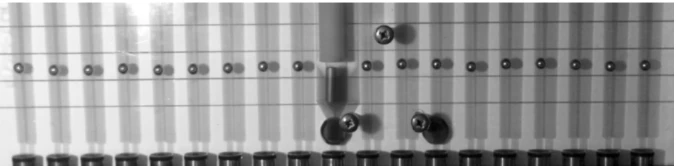
Of course, the overall height of the indicator marbles has consistently increased, which is caused by a decrease in temperature and an increase in cylinder oil viscosity, which is a normal phenomenon.
Due to the same amount of oil injection, when the viscosity is high, the oil can drive the indicator ball to jump to a higher height.
Cause analysis
Based on the structure of the mechanical cylinder oil injector and the analysis of disassembly and inspection after abnormal operation in 2013 and 2014:
The reasons for the irregular movement of the indicated marbles on the cylinder oil injector of the main engine of this round are as follows:
Although the overall temperature control of the cylinder oil heating process is relatively low (below 50 ℃), in fact, during heating, the oil produces bubbles on one side, and the bubbles dissolve in the oil on the other side. Therefore, there will be more bubbles in a certain area near the heater core, while there will be fewer to no bubbles in other areas. The production and complete disappearance of bubbles require a process
From the structure of the oil injector, the heating core is located below the suction port of each oil injection unit, but the distance is relatively close, only about 2cm. The bubble area will expand towards the suction port of the oil injection unit, causing the oil injection unit to occasionally suck in bubbles, thereby interfering with its action and causing the indicator marble to move irregularly. Although no bubbles were observed at the oil position of the indicator marble, this is because the bubbles dissolved in the oil again after pressurization
Due to the irregularity of the area where bubbles exist, there will be irregular movements of various oil injectors and oil injection units with varying heights of indicated marbles.
So, heating the oil to produce bubbles is the root cause of the irregular movement of the indicator ball.
The activation of the cylinder oil storage cabinet gas supply cylinder oil injector increases the oil supply level. In fact, it pressurizes the injector and suppresses the generation of bubbles, especially for NO.1/2/3 cylinders close to the oil inlet. It also has an effect on NO.4/5/6 cylinders, reducing the frequency of irregular actions. However, this cannot fundamentally solve the problem.
When the ship is moored, the oil injectors are all in an automatic heating state. Therefore, when the ship first starts running, the oil injectors are actually full of heated hot oil (about 6-8L), and the bubbles have dissolved in the oil again. Therefore, during the first period of operation of the main engine (1-3 hours), no irregular phenomenon of the oil injectors was observed
The copper surface of the heating core has severe scaling, indicating a high surface temperature, which may be due to the later addition of an electric heater with excessive power.
It is understood that shortly after purchasing from abroad, the oil injector electric heater was damaged and replaced with a domestic substitute product. The power configuration was incorrect, so simply cleaning the surface of the heating tube or replacing it with the same substitute product cannot fundamentally solve the problem.
Because the power of the electric heater is strictly calculated based on the flow rate of the oil injector during normal operation, usually around 100W.
Ensure that the cylinder oil supplied by the oil injector to the cylinder is within the appropriate temperature range, which ensures that the cylinder oil entering the cylinder is at the appropriate viscosity, forming a good oil film on the surface of the cylinder liner and providing lubrication.
Excessive or insufficient cylinder oil temperature is not conducive to the formation of a good oil film, which can cause abnormal wear on the surface of the cylinder liner and piston rings.
Lowering the temperature control of the heater actually reduces the heating time (the temperature controller of the heater is in on/off control mode). In the convective heating state, it also reduces the surface temperature of the heating core, thereby reducing the amount of bubbles produced and narrowing the bubble area near the heating core. That is, the bubble area is far away from the suction port of the oil injection unit, indicating that the irregular movement of the marble naturally disappears.
The requirements for cylinder oil in the diesel engine manual are:
The viscosity of the cylinder oil entering the cylinder liner must be controlled between 100-150cSt.
At present, the cylinder oil used in this round is Mobil 560, and the inlet oil temperature should be controlled at around 45 ℃, which is more suitable.
From the thermometer reading attached to the surface of the oiler, it can be seen that the originally set heating temperature is too high.
Due to the set temperature being too high, the heating time of the heater increases, resulting in an increase in the generation of bubbles and an increased probability of being sucked in by the oil filling unit, leading to an increased probability of irregular movement of indicator marbles.
So controlling the oil temperature can fundamentally solve the problem of irregular movement of indicator balls
In summary, the reason for the irregular movement of the indicated marbles on the oil injector of the main engine cylinder in this round is that the power configuration of the electric heater of the oil injector of the main engine cylinder is improper, and the oil heating temperature is too high.
Improvement measures
From the above analysis of the reasons, it can be seen that eliminating or reducing the generation of bubbles in the oil during the heating process is the key to avoiding the irregular movement of the oil injector indicator ball. Therefore, it is necessary to solve the power configuration and heating temperature control problems of the oil injector electric heater, with a focus on strictly controlling the heating temperature
Strictly follow the requirements of the diesel engine manual and control the heating temperature.
The instruction manual of the oil injector requires a viscosity of 100-150cSt for cylinder oil at 45 ℃. Considering that there is still a certain temperature increase at the oil injection chamber of the cylinder liner (higher cylinder wall temperature), it is best to control the heating oil temperature at the oil injector at around 40 ℃. This can ensure the appropriate viscosity of the cylinder oil and reduce the generation of excessive bubbles during electric heating, ensuring the normal operation of the oil injector.
Strengthen the daily inspection and maintenance of oil injectors, and promptly handle any problems found.
Although temperature control is automatic, it is important to measure it frequently during operation and adjust it promptly if any changes are detected.
Adjust the oil injection amount in a timely manner according to the load changes of the host to ensure the normal operation of the host.
If it is not possible to purchase the oil injector electric heater from the original manufacturer, it should be ensured that the parameters of the electric heater are the same when using domestic substitute products.
Conclusion
The main engine cylinder oil injector is a crucial equipment to ensure the normal operation of the diesel engine. During maintenance and daily inspections, it is necessary to strictly follow the requirements of the manual, observe, touch, smell, and listen frequently to ensure that it is in good working condition.