
M-wheel is a car transport ship with stern jump, manufactured by a shipyard in Japan in 1998. It uses UEC6L45MC main engine with a power of 5295.591kW and a speed of 158r/min. The turbocharger model is Mitsubishi MET-53SC, with a maximum speed of 17200r/min.
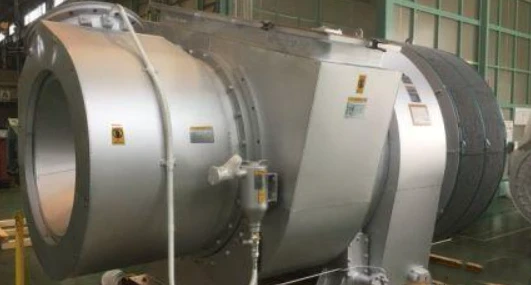
M ship returned to Japan from a South American country on a certain voyage, and shortly after departure, it was discovered that there was a strong choking exhaust gas in the cabin.After inspection, it was found that the exhaust gas was leaking from the exhaust end of the turbocharger of the main engine. Further careful examination revealed that the sealing ring at the exhaust end of the turbine had failed, and the exhaust gas was leaking from this location. Except for being discharged directly into the atmosphere after passing through the exhaust gas boiler to the chimney, the exhaust gas of the main engine is not allowed to leak outside the flue. Once leaked, it will not only pollute the cabin, but also deteriorate the operating environment of cabin equipment and the working environment of cabin personnel. In this case, due to the fact that the suction end of the host turbine is close to the exhaust gas leakage point, some of the exhaust gas is sucked into the pressure end of the turbocharger, causing dirt in the intake duct of the host and damaging its normal operation.
2, Introduction to MET -53SC Turbine
The Mitsubishi MET-SC turbocharger is an important improvement of Mitsubishi Heavy Industries' turbocharging technology based on MET-SA, using a rear curved impeller and waterless cooling; The MET-SC turbine is an improved version of the MET-SB impeller.
The MET-53SC turbocharger has two airtight measures in its structure: ① For the exhaust gas flowing along the turbine disc, a labyrinth seal device is installed at the shoulder of the turbine disc. The exhaust gas is throttled multiple times through the labyrinth seal device, resulting in a decrease in pressure, an increase in volume, and a decrease in density. The amount of exhaust gas flowing through the labyrinth seal device is very small, playing a sealing role; ② The exhaust gas flowing along the gap between the outer sealing ring and the exhaust casing is sealed by the sealing ring at that location.
For the labyrinth seal device at the shoulder of the turbine disc, MET-53SC is also designed to connect compressed air into the sealed chamber to seal off any potential leaks of exhaust gas. The air in the sealed chamber comes from the compressed air of the compressor, which passes through the M-hole at the compression end and enters the sealed chamber through the intake pipe, preventing the lubricating oil from entering the turbine in the direction of the compression end and preventing the lubricating oil from leaking and contaminating the turbine blades; Push a small amount of leaked exhaust gas towards the exhaust end to prevent it from entering the bearing and contaminating the lubricating oil. Under normal circumstances, the compressed air that serves as an air seal in the sealed chamber is not directly discharged into the atmosphere.
MET-53SC turbocharger exhaust gas turbine end and exhaust gas leakage disposal diagram 1.

3, Handling method
After the ship anchored, the engine room personnel opened the exhaust gas end of the main engine turbocharger and found that the sealing ring between the exhaust gas turbine shell and the turbine body had lost elasticity, causing a decrease in sealing performance and exhaust gas leakage from there.Due to the lack of spare parts on board, we attempted to use the labyrinth seal ring that was replaced during previous maintenance. After correction, we inserted it into the original seal ring groove and partially embedded flame-retardant sealing material on both sides of the embedded seal ring. At the same time, we filled it with some high-temperature resistant sealant. Considering that the self-produced sealing device on the ship will solidify due to the high temperature and vibration of the turbocharger after a period of operation of the main engine, and lose its sealing effect together with the embedded sealing material.
Based on the study of the MET-53SC manual and the structural characteristics of the MET-53SC, it has been decided to drill four 3mm diameter holes (symmetrically located) at the rear of the turbine disc shoulder to seal off potential leaks of exhaust gas by introducing partially pressurized air from the sealed chamber. After processing, the host resumed operation. Although there was still a very minor leak, it was confirmed through inspection that it was clean boost air, not leaked exhaust gas.
4, Sealing Failure Analysis
One of the characteristics of Mitsubishi MET-SC turbocharger is waterless cooling. Although the use of non cooled intake and exhaust housings can reduce acidic corrosion, the components at the exhaust end of the turbocharger are subjected to high temperatures of around 400C during most of the normal load operation of the host, which is a rigorous test of the material performance of the turbocharger components and can easily cause non moving components to bite and lose elasticity due to high temperatures. If there are non compliant factors in the previous manufacturing, installation, and disassembly processes, it will accelerate the failure of the sealing ring.
5, Precautions after departure
In order to timely understand whether the lubricating oil passing through the turbocharger is contaminated, a sampling cock is connected to one end of the outlet pipeline of the main turbine lubricating oil. After sampling twice a day, it is compared with the lubricating oil sampling at the outlet of the main turbine oil separator (dropped onto a clean white paper). At the same time, the outlet temperature of the main turbine lubricating oil is continuously observed and recorded, and no abnormalities in the oil quality or temperature of the turbine lubricating oil are found. After the ship safely sailed to Japan, the manufacturer sent personnel to thoroughly dismantle and inspect the turbocharger, and transported it to the factory for various tests. The turbocharger returned to normal condition.