
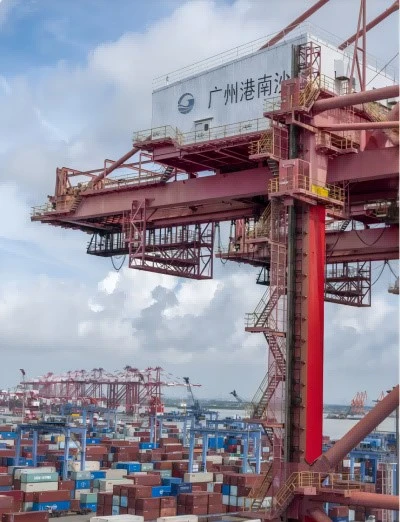
The congestion in Singapore's container ports has reached the most serious level since the outbreak of COVID-19, which indicates that ships diverted for a long time to avoid the Red Sea attack have disrupted global shipping - bottlenecks have also emerged in other Asian and European ports.
Retailers, manufacturers, and other industries that rely on large container ships are once again facing problems such as soaring freight rates, port congestion, and shortages of empty containers, although many consumer facing companies hope to increase inventory before the end of the shopping season
Maritime data company Linerlitica stated this month that global port congestion has reached its highest level in 18 months, with 60% of waiting vessels located in Asia. As of mid June, ships with a total capacity of over 2.4 million 20 foot standard container units (TEUs) are waiting at the anchorage.
But unlike during the epidemic, this time it was not a rush of home consumers to buy, leading to overcrowding at the port. On the contrary, due to ships choosing longer African routes to avoid the Red Sea, their schedules were disrupted, missed sailing plans, and port calls were reduced. The Red Sea has been attacked by the Yemeni Housa organization since November last year.
Singapore is the world's second largest container port, and congestion has been particularly severe in recent weeks. The Maritime and Port Authority (MPA) of Singapore stated at the end of May that the average waiting time for container ships to berth is two to three days, while container tracking companies Linerlitica and PortCast indicated that delays could last up to a week.
Normally, the berthing time should be less than one day. Due to some ships not stopping in Singapore, congestion has also occurred at nearby ports. Linerlytica stated that the pressure has shifted to the ports of Klang and Tanjung Parapas in Malaysia, while waiting times at Chinese ports have also increased, with Shanghai and Qingdao having the longest delays.
De Luli expects congestion at the main transfer ports to remain at a relatively high level, but it is expected to ease as carriers increase capacity and resume flights. The Singapore Maritime and Port Authority has announced that port operator PSA has reopened the old berths and yards at Keppel Terminal and will open more berths at Tuas Port to address the issue of long waiting times.
Maersk, the world's second-largest container transportation company, announced this month that it will cancel two westbound routes departing from China and South Korea in early July due to severe congestion at ports in Asia and the Mediterranean.
Busy Season
Shippers and research companies have stated that the annual peak shipping season has also arrived earlier than expected, exacerbating port congestion
Niki Frank, CEO of DHL Global Freight Asia Pacific, said that this seems to be driven by restocking activities (especially in the United States) and early shipments due to increased customer demand expectations.
At the same time, container freight rates have skyrocketed, increasing the risk of buyers encountering price increases again, just like the post pandemic inflation surge that central banks around the world are still working hard to control.
China Philippines, a freight forwarder focused on Asia, stated that freight rates had stabilized in April, but in May, "China's exports of e-commerce, electric vehicles, and renewable energy related goods by sea increased significantly. The peak season, which traditionally started in June, was brought forward by a month, leading to a surge in shipping costs."
Data provider Descartes stated that container imports from the top 10 largest ports in the United States increased by 12% in May, thanks to the second highest monthly import volume since January 2023.
The freight platform Xeneta stated that freight rates from Asia and Singapore to the East Coast of the United States are at their highest level since September 2022, while freight rates to the West Coast of the United States are at their highest level since August 2022.
Some industry insiders believe that one of the reasons for the bottleneck in Chinese ports is that US importers are competing to purchase Chinese products such as steel and medical products, as these products will have significantly increased tariffs starting from August 1st.
But Jared Bernstein, the chairman of the Council of Economic Advisers in the United States, said that the newly imposed US tariffs will only affect about 4% of China's imports into the United States. Los Angeles Port is the largest gateway for China's maritime imports to the United States, and its executive director Gene Seroka is also expected to have limited impact.
He said, "We may see some goods coming in, but it won't cause large-scale transportation."
Concerns about possible strikes at US ports this year may also advance the peak season, while DHL has stated that strikes at German ports have exacerbated traffic congestion. Experts warn that all these interferences could mean an increase in consumer prices.
"This is a huge financial blow for shippers," said Peter Sand, Chief Analyst of Xeneta